

advantages of using pcb circuit board assembly
Utilizing PCB (Printed Circuit Board) circuit board assembly offers a plethora of advantages that have revolutionized electronics manufacturing and propelled technological advancements across various industries. From consumer electronics to aerospace and healthcare, the benefits of PCB assembly are evident in the efficiency, reliability, and scalability it brings to the production process.
One of the primary advantages of pcb circuit board assembly is its compactness and space efficiency. PCBs allow for the integration of numerous electronic components onto a single board, eliminating the need for bulky and cumbersome wiring systems. By condensing components onto a smaller footprint, PCBs enable the creation of sleeker and more compact electronic devices, saving valuable space in applications where size is a constraint, such as smartphones, wearables, and automotive electronics.
Moreover, PCB circuit board assembly enhances the reliability and durability of electronic systems through precise component placement and soldering. Automated assembly processes ensure consistency and accuracy, minimizing the risk of defects or malfunctions commonly associated with manual soldering techniques. The reliability of PCB assemblies is further bolstered by stringent quality control measures and comprehensive testing protocols, including automated optical inspection (AOI) and functional testing, which identify and rectify any issues before the final product reaches the market.
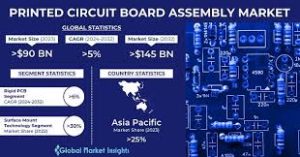
What are the advantages of using pcb circuit board assembly?
Another significant advantage of PCB circuit board assembly is its scalability and cost-effectiveness. Automated assembly lines enable high-volume production with minimal labor costs, resulting in economies of scale that drive down production costs per unit. Additionally, PCBs can be designed for mass production using standardized manufacturing processes, further reducing production overheads and lead times. The scalability of PCB assembly makes it ideal for meeting the demands of rapidly evolving markets and accommodating changes in design requirements or production volumes.
In addition to cost savings, PCB circuit board assembly offers greater design flexibility and versatility compared to traditional wiring methods. PCBs allow for intricate circuit designs with precise routing and connectivity, enabling the integration of complex electronic systems into compact and efficient layouts. Designers can easily modify and iterate PCB designs using computer-aided design (CAD) software, facilitating rapid prototyping and product development cycles. This flexibility is invaluable for adapting to changing market trends, technological advancements, and customer requirements in industries where innovation is paramount.
Furthermore, PCB circuit board assembly enhances electrical performance and signal integrity by minimizing electromagnetic interference (EMI) and signal loss. PCBs provide a controlled environment for routing signals, ensuring impedance matching and minimizing signal distortion. Advanced PCB materials and manufacturing techniques, such as high-frequency laminates and controlled impedance routing, enable the development of high-speed digital and RF (radio frequency) circuits with superior performance and reliability.
The environmental sustainability of PCB circuit board assembly is also worth noting, as it reduces material wastage and energy consumption compared to traditional wiring methods. PCBs are typically made from recyclable materials, such as fiberglass-reinforced epoxy resin (FR-4), which can be reclaimed and reused in future manufacturing processes. Additionally, the efficiency of automated assembly lines minimizes energy consumption and carbon emissions, contributing to a greener and more sustainable manufacturing ecosystem.
In conclusion, the advantages of using PCB circuit board assembly are manifold, ranging from space efficiency and reliability to scalability, cost-effectiveness, design flexibility, and environmental sustainability. PCBs have become indispensable in the electronics industry, enabling the development of innovative electronic devices and systems that drive progress and shape the future of technology. As advancements in PCB assembly techniques continue to evolve, the benefits it offers will continue to drive innovation and propel the electronics industry forward.