

rapid radios connect to Bluetooth
Unlike the typical push to talk walkie-talkie, rapid radios don’t charge monthly expenses or fees. This makes them more reliable and Value-productive. Bluetooth is a wireless technology that allows you to connect your radio to various devices such as earpieces. It operates within a range of 10 meters and requires an unobstructed path for communication. The Bluetooth SIG has developed several revisions to the technology since its inception. Each new version improves transfer speeds, range and the feature set.
The original incarnation of the technology is referred to as Classic Bluetooth. It operates over 79 channels in the 2.4 GHz frequency band and provides wireless communication between devices like phones, headsets and speakers. It uses a quaternary phase shift modulation which doubles the data rate of previous versions, from 732 kbps to 2.1 Mbps, while retaining the 10 meter maximum expected range. It also has an adaptive hopping pattern which excludes certain frequencies on a per-slave basis, improving Bluetooth co-existence with static (non-hopping) ISM systems. This is one of the main reasons why the EDR variant is often preferred for mobile phone pairings and other high-speed applications.
Although many devices are marketed as Bluetooth-enabled, they are actually running on an older technology known as Bluetooth Low Energy (BLE). This form of the technology is optimized for short bursts of data transmission and operates at a lower frequency. This makes it ideal for devices that do not need to handle large amounts of data and instead prioritize battery life. Think of a sensor in a temperature-controlled warehouse that you want to set and forget for months or years.
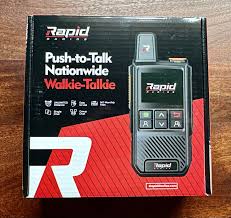
Can rapid radios connect to Bluetooth?
With a lower emission range and not a continuous connection, BLE can save on development and acquisition costs as well as reduce energy consumption. It can be used in healthcare applications like the Continua Health Alliance-approved BLP blood pressure and HTP health thermometer profile or in contact tracking solutions to help prevent the spread of infectious diseases. Bluetooth is a wireless technology used in various products like telephones, laptops, and tablets. It uses a short-range, low-power radio frequency to transfer data between devices that are within a close range of each other. Bluetooth devices can connect in groups called piconets.
Bluetooth has many advantages, but there are also some security issues. For example, Bluetooth can be hacked to track a person’s movements. This is known as bluebugging. The Bluetooth Special Interest Group (SIG) has released several revisions of its standard. Version 2.0 brought Enhanced Data Rate (EDR), which offers data rates up to 3 Mbps and lower power consumption. It also revolutionized device pairing with Secure Simple Pairing. Version 4.1 added security and data protection enhancements and improved device battery life.
Bluetooth technology makes it easier to connect wirelessly between devices. Whether you’re taking an important call in your earphones, transferring photos from a camera to a phone or tablet, or communicating between a cell phone and fitness tracker, it’s hard to imagine doing these tasks without the convenience of Bluetooth. When two Bluetooth devices are paired, they form a personal-area network called a piconet. The devices can then communicate within the piconet without interference from other Bluetooth devices or other types of wireless technologies.
The Bluetooth classic radio (also known as the Bluetooth Basic Rate or BR) uses frequency-shift keying modulation to transmit data at up to 1 Mbps. In comparison, the Bluetooth low energy (BLE) radio has a transmission rate of up to 24 Mbps while reducing power consumption. The 2.4 GHz ISM radio-frequency spectrum used by Bluetooth is shared by a variety of other devices, including Wi-Fi routers, microwave ovens and some cordless phones. When these devices operate in close proximity to Bluetooth BR/EDR and BLE equipment, the wireless communications can interfere with each other, causing random Bluetooth disconnections from your computer.
The good news is that you can prevent these random Bluetooth disconnections by following some simple troubleshooting steps. For example, you can try restarting your PC or laptop and reconnecting the Bluetooth device to see if this resolves the problem. You can also try updating the Bluetooth driver to fix the problem. A tool like Driver Easy can automatically detect if your Bluetooth driver is outdated or corrupted and download the latest version for you.