

flex circuit manufacturers ensure long-term performance
Ensuring long-term performance is a primary concern for flex circuit manufacturers, as flexible circuits are often used in critical applications where reliability and durability are essential. These circuits are found in a variety of industries, including aerospace, automotive, medical devices, and consumer electronics, where they must endure harsh environmental conditions, mechanical stresses, and extended operational lifetimes. To achieve long-term performance, manufacturers employ a combination of high-quality materials, advanced design techniques, rigorous testing procedures, and robust manufacturing processes that ensure the circuits function reliably throughout their lifecycle.
One of the first steps in ensuring long-term performance is selecting the right materials. The base material for flexible circuits, typically polyimide or polyester, plays a significant role in determining the circuit’s durability and resistance to environmental factors. Polyimide is widely used due to its superior thermal stability, chemical resistance, and mechanical strength. It can withstand high temperatures, making it ideal for automotive and aerospace applications where exposure to heat is common. Polyester, while less thermally stable than polyimide, is used in applications where cost is a concern, but still requires adequate flexibility and resistance to wear and tear. Choosing the correct base material is essential for the circuit’s ability to handle environmental conditions such as moisture, chemicals, UV radiation, and high or low temperatures without degradation.
Flex circuit manufacturers also focus on the choice of conductive materials, typically copper, to ensure that electrical performance remains consistent over time. Copper has excellent conductivity, but its performance can be affected by oxidation or corrosion over time, especially in humid or chemically aggressive environments. To prevent this, manufacturers often apply surface finishes such as gold, silver, or nickel to the copper traces. These coatings provide a protective barrier that enhances the longevity of the conductive material by preventing oxidation and improving the circuit’s resistance to wear. Additionally, for circuits used in high-frequency applications, the thickness and quality of the copper foil are carefully controlled to minimize signal degradation and maintain electrical integrity.
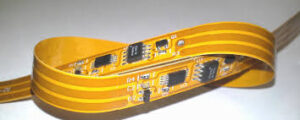
How do flex circuit manufacturers ensure long-term performance?
To enhance the mechanical durability of the flex circuit manufacturer ensure that the designs are optimized for flexibility and stress resistance. Flex circuits are often subjected to repeated bending, twisting, and stretching, so manufacturers need to carefully design the trace routing, component placement, and layer stacking to prevent damage. For instance, by avoiding sharp bends in the circuit traces and providing adequate spacing between components, manufacturers can reduce the risk of trace breakage or short circuits. The use of strain relief features such as rigid-flex designs, where rigid sections are combined with flexible areas, also helps to manage stress at critical points in the circuit.
Manufacturers also use advanced techniques to strengthen the flex circuit’s protection. One such method is the use of coverlay, a protective layer that shields the circuit from environmental factors, mechanical damage, and contamination. Coverlay materials are typically polyimide or polyester and provide electrical insulation and protection against abrasion, moisture, and other external elements. By ensuring that the coverlay is precisely applied and properly aligned, manufacturers can ensure that the flex circuit maintains its mechanical strength and electrical performance over time. The proper selection and application of coverlay materials are especially important in high-stress environments, such as those found in automotive or aerospace applications, where circuits are exposed to constant motion and potential for physical damage.
In addition to material and design considerations, extensive testing is a key part of ensuring long-term performance. Flex circuit manufacturers employ a range of tests to assess the durability, electrical performance, and reliability of their products. These tests include thermal cycling, which exposes the circuit to extreme temperature variations to simulate the stresses it will experience over time. Manufacturers also conduct mechanical testing, such as bend testing, to ensure that the circuit can withstand repeated bending and flexing without failure. Electrical tests, including impedance testing and continuity checks, are used to verify the integrity of the circuit’s conductive traces and ensure proper signal transmission. These rigorous tests help to identify potential weaknesses in the circuit design or materials that could impact long-term performance and allow manufacturers to make necessary improvements before the circuits are delivered to customers.
Another factor contributing to long-term performance is the ongoing monitoring of manufacturing processes. Manufacturers must maintain high levels of quality control throughout the production process to ensure that each flex circuit is produced to specification. This includes using automated inspection systems, such as automated optical inspection (AOI) and X-ray inspection, to detect defects like misaligned traces, voids, or short circuits. These systems can identify problems early in the manufacturing process, reducing the likelihood of faulty circuits reaching the final stages of production. By maintaining strict quality control and ensuring that each circuit meets the necessary specifications, manufacturers can help guarantee that the flex circuits will perform reliably for their intended lifetime.
In conclusion, flex circuit manufacturers ensure long-term performance by carefully selecting high-quality materials, optimizing designs for durability, applying protective coatings, and conducting rigorous testing throughout the production process. These efforts combine to produce flexible circuits that are resistant to environmental factors, mechanical stress, and electrical degradation. Whether used in automotive, medical, or consumer electronics applications, these high-performance circuits are built to deliver reliable service over the long term, contributing to the overall success and longevity of the devices they power.