

flex PCB suppliers
The manufacturing of a flexible printed circuit board can be a challenging task, especially for high-volume orders. However, the right flex PCB supplier can handle this challenge with ease and provide the high-quality products needed to meet production demands. Here are six key things to look for when evaluating potential flex PCB manufacturers.
Check the potential supplier’s capabilities to ensure they can produce your flex pcb supplier per your specifications. This includes examining their equipment, certifications (e.g. ISO), and quality standards for first-article inspection, in-process testing, and end-product inspections. It also involves ensuring they have the right technology and equipment to handle your unique flex PCB design.
Review the manufacturer’s website and online directories to learn about their background, expertise, and capabilities. It is also a good idea to talk with past customers and get samples of their work. This will give you insights into their quality, reliability, and responsiveness. It will also help you narrow down the list of prospects to a few suitable candidates. Obtain quotes from the shortlisted suppliers and compare their pricing to find one that offers value for your budget. You should also consider their production lead times to determine whether they can meet your schedule.
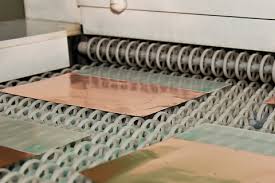
How do flex PCB suppliers handle high-volume orders?
Flex PCBs can be made more rigid and durable by using stiffeners in specific areas of the board. These can be made of a variety of materials, such as FR4, Kapton, or aluminum. They are often adhered to the flex circuit by using pressure-sensitive adhesives or acrylic thermally cured adhesives. Stiffeners can improve abrasion resistance, weight balance, and heat dissipation.
During the patterning process, copper is deposited onto the base raw material substrate (e.g. FR4, Rogers 4003) and then etched to create the circuit patterns. After the etching step, the resulting panels are coated with photoresist and then overlaid with your circuit design artwork. The resulting image is transferred to the production panel with collimated ultraviolet light. Flex circuits can have either blind or buried vias, but it is recommended to stagger them to prevent stress cracking and failures. It is also important to keep the copper thickness and width as small as possible to avoid causing asymmetrical impedances.
The flexibility of a flex circuit makes it well-suited for dynamic applications where the circuit may be subjected to repeated bending or stretching. For example, flex circuits can be used in automotive electronics to connect displays and other modules to the dashboard or control panels. They can also be used in aerospace applications to replace wiring harnesses and improve performance in harsh environments. Compared to conventional circuit boards, flex circuits can offer advantages like cost savings, reduced assembly time, improved ergonomics, and more. However, they do have some limitations, including lower wiring densities, difficulty with regulating impedances, and limited current carrying capacity. In addition, the manufacturing process for flex circuits is challenging, and they are more prone to wear and corrosion.