

Printed circuit assembly services
Printed circuit assembly services employ several primary methods to assemble electronic components onto printed circuit boards (PCBs), each tailored to meet specific requirements and challenges in the manufacturing process. These methods encompass a range of techniques and technologies designed to ensure precision, efficiency, and reliability in assembling components onto PCBs.
One of the primary methods used in printed circuit assembly services is surface mount technology (SMT). SMT involves mounting electronic components directly onto the surface of the PCB, as opposed to inserting leads into holes drilled in the board, as is done with through-hole technology. SMT components come in various packages, including resistors, capacitors, integrated circuits (ICs), and discrete semiconductors, each requiring specialized equipment and techniques for assembly. SMT offers several advantages, including higher component density, improved electrical performance, and reduced manufacturing costs, making it the preferred method for many modern electronic devices.
Another common method used in printed circuit assembly services is through-hole technology (THT). THT involves inserting component leads through holes drilled in the PCB and soldering them to the opposite side of the board. This method is typically used for larger, heavier components such as connectors, transformers, and electrolytic capacitors, which require additional mechanical support and stability. While THT offers robust mechanical connections, it is less suitable for high-density applications due to its larger component footprint and limited routing flexibility.
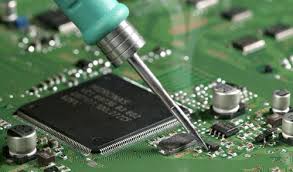
What are the primary methods used in Printed circuit assembly services?
Mixed assembly is another method employed in printed circuit assembly services, combining both SMT and THT techniques to leverage the strengths of each approach. Mixed assembly allows manufacturers to utilize SMT for smaller, surface-mount components while employing THT for larger, through-hole components, thereby optimizing component placement and assembly efficiency. This hybrid approach enables manufacturers to achieve a balance between component density, mechanical robustness, and manufacturing flexibility, catering to a wide range of electronic device designs and requirements.
In addition to these primary assembly methods, printed circuit assembly services may also involve specialized techniques and technologies to address specific challenges or requirements. For example, flip chip assembly involves mounting bare semiconductor chips directly onto the PCB using solder bumps, eliminating the need for wire bonding and enabling higher component density and improved electrical performance. Ball grid array (BGA) assembly is another technique used to mount components with densely packed arrays of solder balls onto the PCB, offering enhanced thermal and electrical properties for demanding applications.
Automation plays a crucial role in modern printed circuit assembly services, enabling high-speed, high-precision assembly of electronic components onto PCBs. Automated pick-and-place machines are used to accurately position surface mount components onto the PCB, while reflow ovens and wave soldering machines are employed to create strong and reliable solder joints. Automated optical inspection (AOI) and X-ray inspection systems are used to detect defects and ensure quality control throughout the assembly process, further enhancing efficiency and reliability.
In conclusion, printed circuit assembly services rely on a variety of primary methods and specialized techniques to assemble electronic components onto PCBs effectively. Whether it’s surface mount technology, through-hole technology, mixed assembly, or specialized techniques such as flip chip assembly and BGA assembly, each method offers unique advantages and capabilities to meet the diverse needs of electronic device manufacturers. By leveraging these methods and embracing automation, manufacturers can streamline the assembly process, optimize product quality, and meet the demands of the ever-evolving electronics industry.